Separate shared facts from brand choices.
The original product, components, and SKU belong to the shared design. Price, selected charm, models, and presentation can vary by brand. Switching between stores should preserve the choices already made.
Product Studio / AI-assisted creative operations
An internal workspace for turning shared jewelry designs into product information and creative assets that respect each brand’s identity.
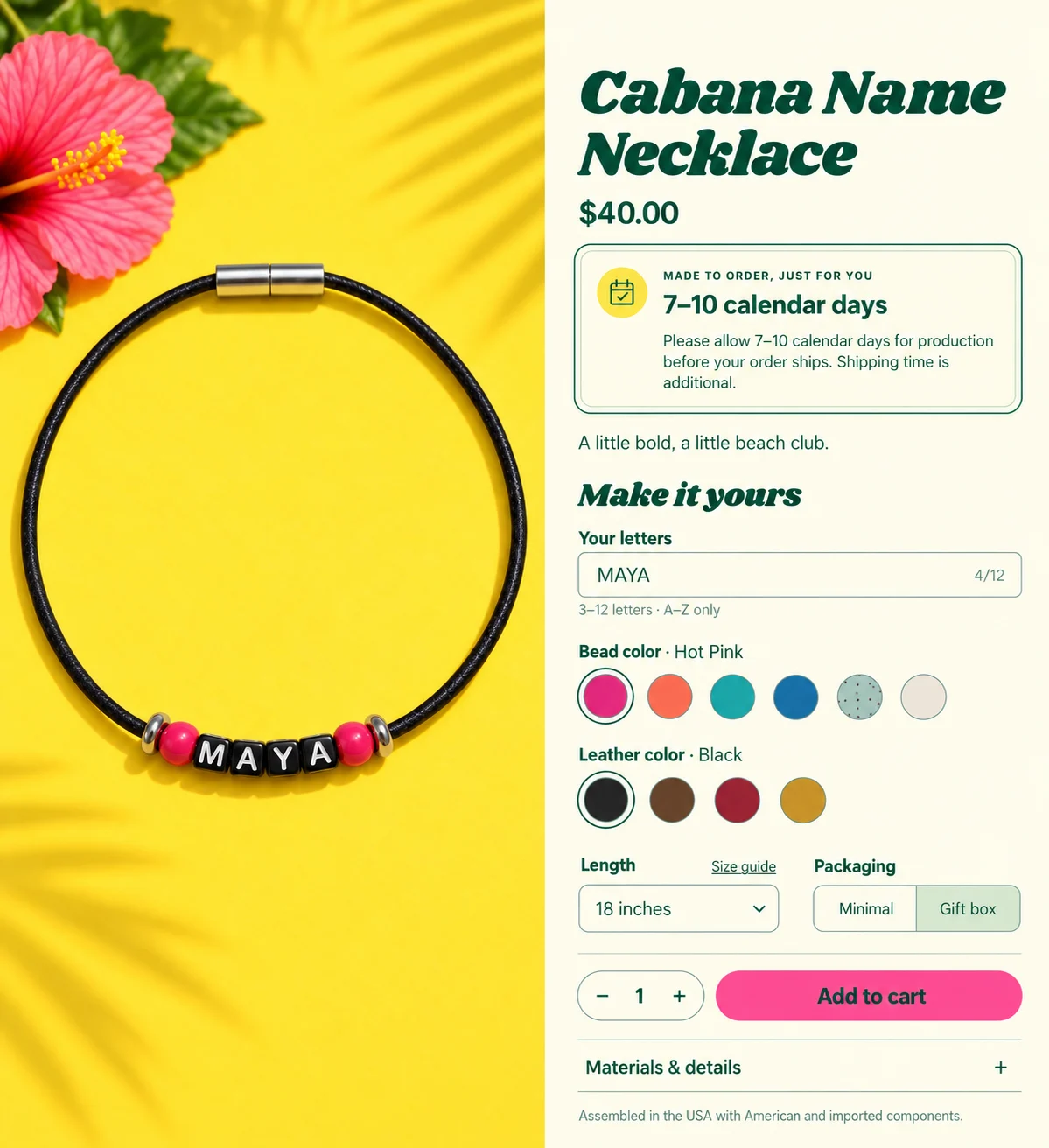
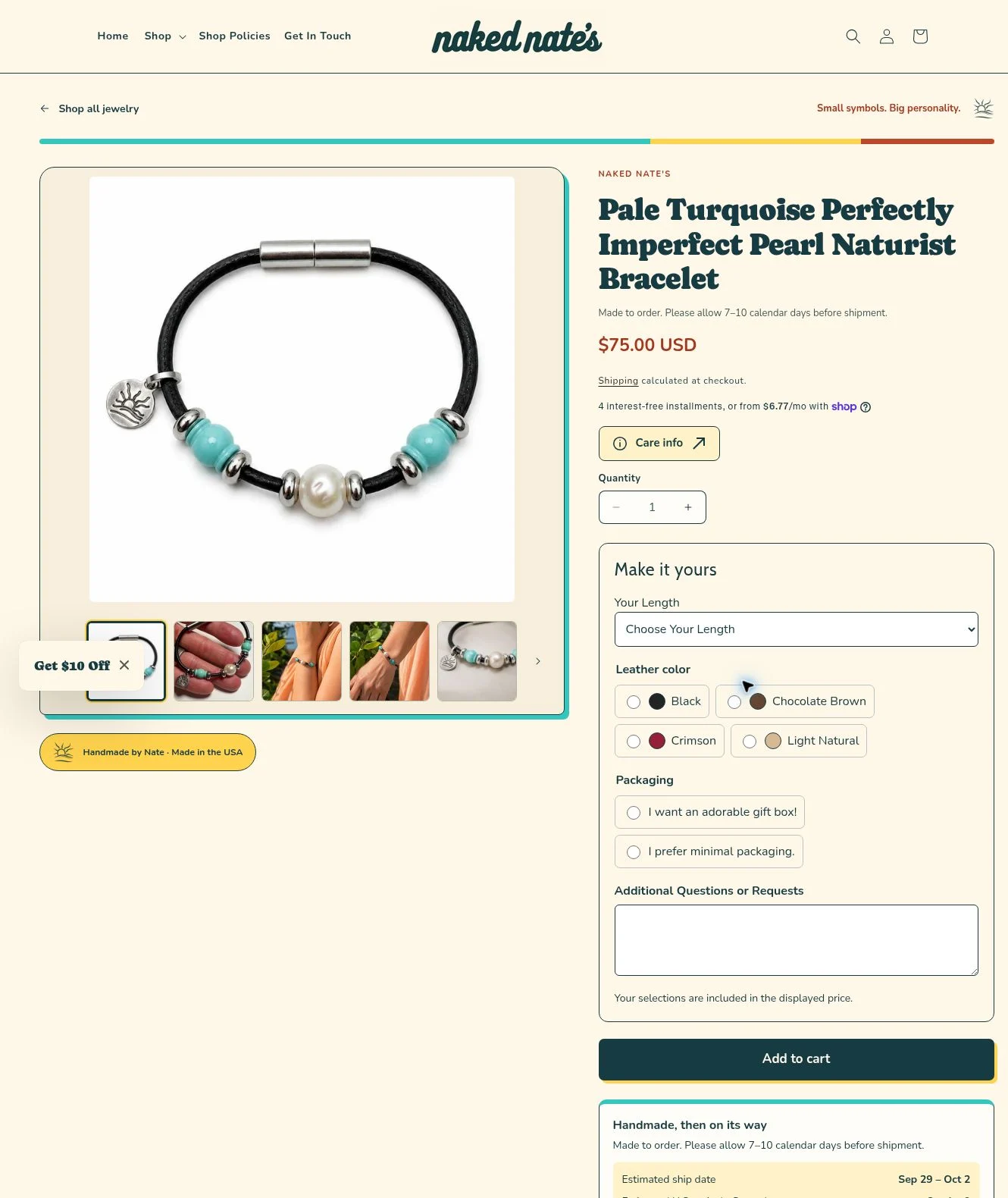
Pineapple Pat’s, Naked Nate’s, and Spexton share product knowledge and some components, but they need distinct visual worlds. Re-entering material information, production details, options, and imagery instructions for every store makes consistency harder to maintain.
I defined Product Studio around a shared product foundation with separate brand settings, so repeated work can be organized while each storefront keeps its own character.
I established the material and sizing defaults, brand-specific photography direction, model choices, packaging options, and review requirements. I directed the interface and the AI-assisted build around the way I create and list products.
As I used it, I identified practical problems: settings resetting between brands, unclear generation progress, hidden rejected results, and the need to review image history. Those observations became implementation requirements.
Product Studio is about repeatable creative work. Shared product facts provide a foundation, while brand-specific decisions preserve the differences that make each store recognizable.
Start with the original product and its materials, components, measurements, sizing options, and reference images. This information should stay consistent wherever the product appears.
Select the relevant stores and define their presentation. Pineapple Pat’s, Naked Nate’s, and Spexton have different backgrounds, model direction, and visual identities; prices and charm choices can also vary.
Product content and imagery need human review for accuracy and fit with the brand. Image history, visible progress, and access to rejected results are part of the review experience I have specified and continue to refine.
A listing needs more than a hero image. The workflow must also account for product options, production timing, draft updates, and whether personalization and packaging choices are carried through the customer’s order.
The original product, components, and SKU belong to the shared design. Price, selected charm, models, and presentation can vary by brand. Switching between stores should preserve the choices already made.
Image work needs visible status and a persistent record. I asked for results and review notes to remain available, including images that did not pass review, so I can understand and improve the outcome.
A useful product workflow extends beyond the image. Material facts, length, personalization, and packaging need to reach the product page and the order correctly. Draft updates must also avoid creating duplicate products.
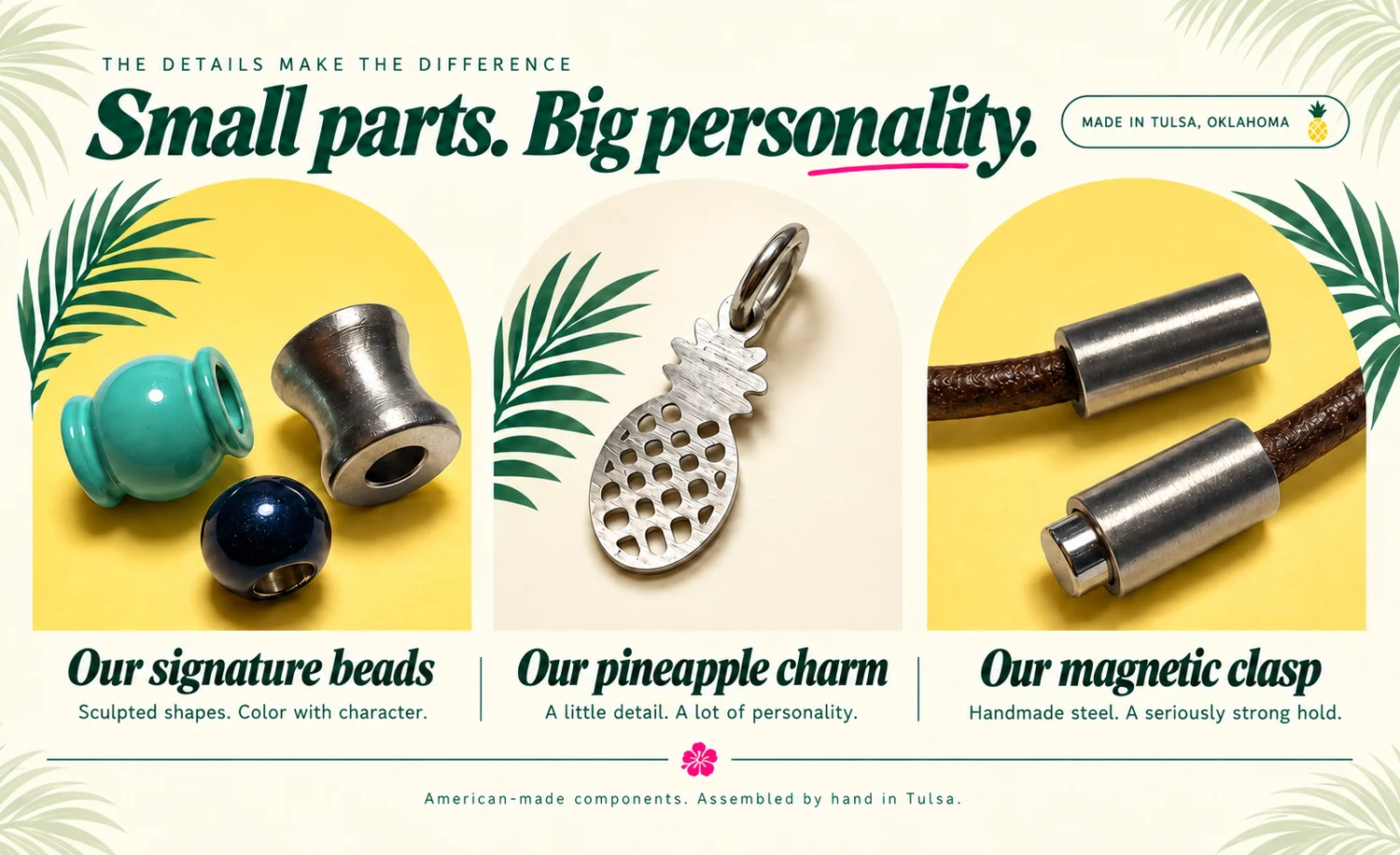
A closer look
The product-page work shown here explores a more compact customization experience. Repeating labels and large framed controls made the options feel heavier than they needed to be. I directed a cleaner arrangement while keeping the production time prominent.
The same thinking applies inside Product Studio. Switching stores should preserve the choices already entered; long-running image work should communicate progress; and a result should remain available for inspection even when it fails a quality check. These are explicit requirements shaped by using the application, with implementation and validation continuing as the tool develops.
Product Studio remains in active development. Image accuracy, store-specific behavior, and the full product-to-order path require continued review and validation.
AI assists with image generation, product-content drafting, and application implementation. I define the brand rules and product facts, review the outputs, and decide which results are suitable for use.
I connect creative standards with operational requirements. The useful outcome is a repeatable way to prepare and review products while retaining the judgment that makes each brand distinct.
Talk with me about this project